Tourism & hospitality
Can be operating-intensive and highly sensitive to location, concept, seasonality and management.

Explore Golden Visa investment regions across the Greek mainland and islands — minimum thresholds, rental potential, and lifestyle, side by side.
Filter by category, sea view, or search a town — every region links through to full pricing and property details.

Europe’s oldest capital and a large, liquid property market, with demand linked to tourism, relocation and regeneration projects such as the Ellinikon.

Greece’s premium coastal strip from Faliro to Vouliagmeni, shaped by the Ellinikon redevelopment — a group of distinct coastal submarkets rather than one market.
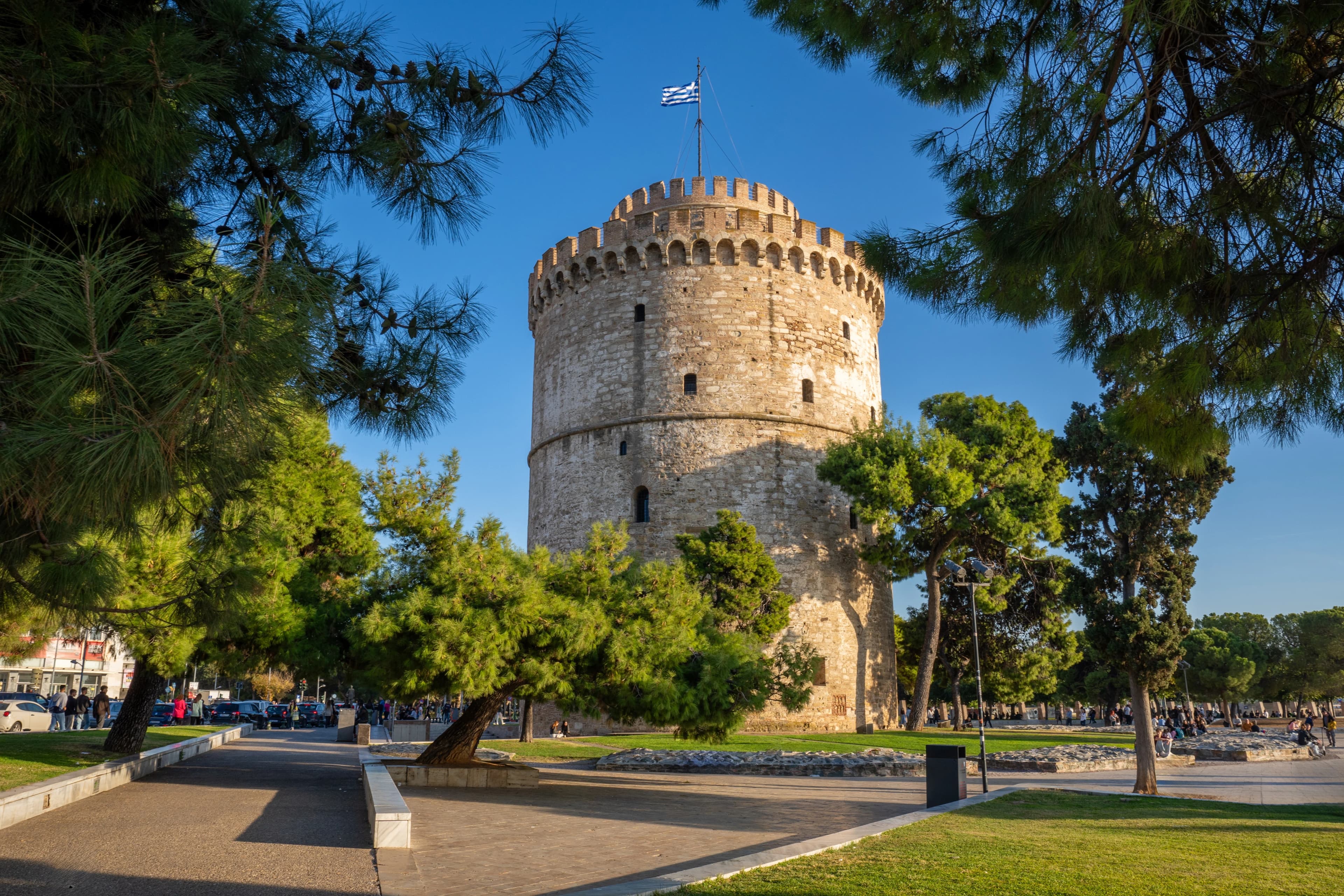
Greece’s second city and Balkan gateway, with a large student population, a growing tech scene, and prices still well below Athens.

A lifestyle-led market of ancient sites, olive groves and coastline, with boutique resorts and varied access and planning conditions.

Greece’s largest island, with a year-round economy, an international airport network, and the country’s most established resort infrastructure.

The iconic white-and-blue island cluster in the Aegean — a globally recognised luxury brand with limited new-build supply.

A globally recognised luxury and nightlife destination, with among the highest per-square-metre prices of any Greek island.
The caldera-view capital of Greek luxury tourism — extremely limited buildable land keeps values structurally high.

The largest of the Dodecanese, combining a UNESCO-listed medieval old town with well-developed resort infrastructure.

A green, Venetian-influenced Ionian island with strong appeal to Northern European and UK buyers and reliable ferry/air links.
The official Enterprise Greece investment framework highlights opportunities across tourism, energy, information and communications technology, logistics and other sectors. Synergia uses sector analysis to help define where a client’s objective may fit; sector inclusion on this website is not itself a recommendation of any individual investment.
Some investments may also support a residence objective, but the legal route must be assessed independently. For real estate, the current Golden Visa framework uses €800,000 and €400,000 standard geographic thresholds, while €250,000 applies only to specific statutory property categories. The residence consequence should never replace the commercial assessment of the underlying investment.
Market data and investment observations are informational and may change. Past price movements or project outcomes do not guarantee future performance. Any investment decision should be assessed against the specific asset, transaction, financing, taxation, legal position and investor objectives.
The sector should follow the investor objective and capability, not the other way around.
Can be operating-intensive and highly sensitive to location, concept, seasonality and management.
Can depend heavily on regulatory, technical, grid, permitting and project-stage factors.
May rely more on team quality, intellectual property, customer concentration, scalability and execution capability than on tangible assets.
Depends on location, connectivity, infrastructure, operating demand and tenant/counterparty quality.
Can range from passive acquisition to complex development, with very different legal, technical and operating risks.
Adds commercial, financial, governance and management questions.
A useful sector comparison does not ask which sector has the 'highest return'. It asks which risks the investor is prepared and able to manage.
Passive exposure may reduce operational burden but can provide less control.
Development exposure may create more value if execution succeeds, but requires capital, time and technical capability.
Operating businesses can offer growth and strategic participation, but depend on people, governance and commercial execution.
Energy can be highly structured but technically and regulatorily intensive.
Tourism can benefit from strong demand while remaining sensitive to seasonality, operating quality and destination risk.
The correct sector is therefore the one whose risk, implementation requirements and holding period are consistent with the investor's objective.
The investor is no longer assessing only an asset. The quality of management, customer relationships, suppliers, working capital, governance, reporting, tax compliance and operating execution become central.
A minority participation also raises different questions from a full acquisition:
Business participation should therefore be assessed as a combination of commercial, financial, legal and governance exposure.
Share the objective, approximate capital range, preferred holding period and whether residence is relevant.
Speak with our team about the Golden Visa and other residence pathways. Athens or UAE team available.